
What Is Peri-Implant Disease? Symptoms, Causes and Treatment
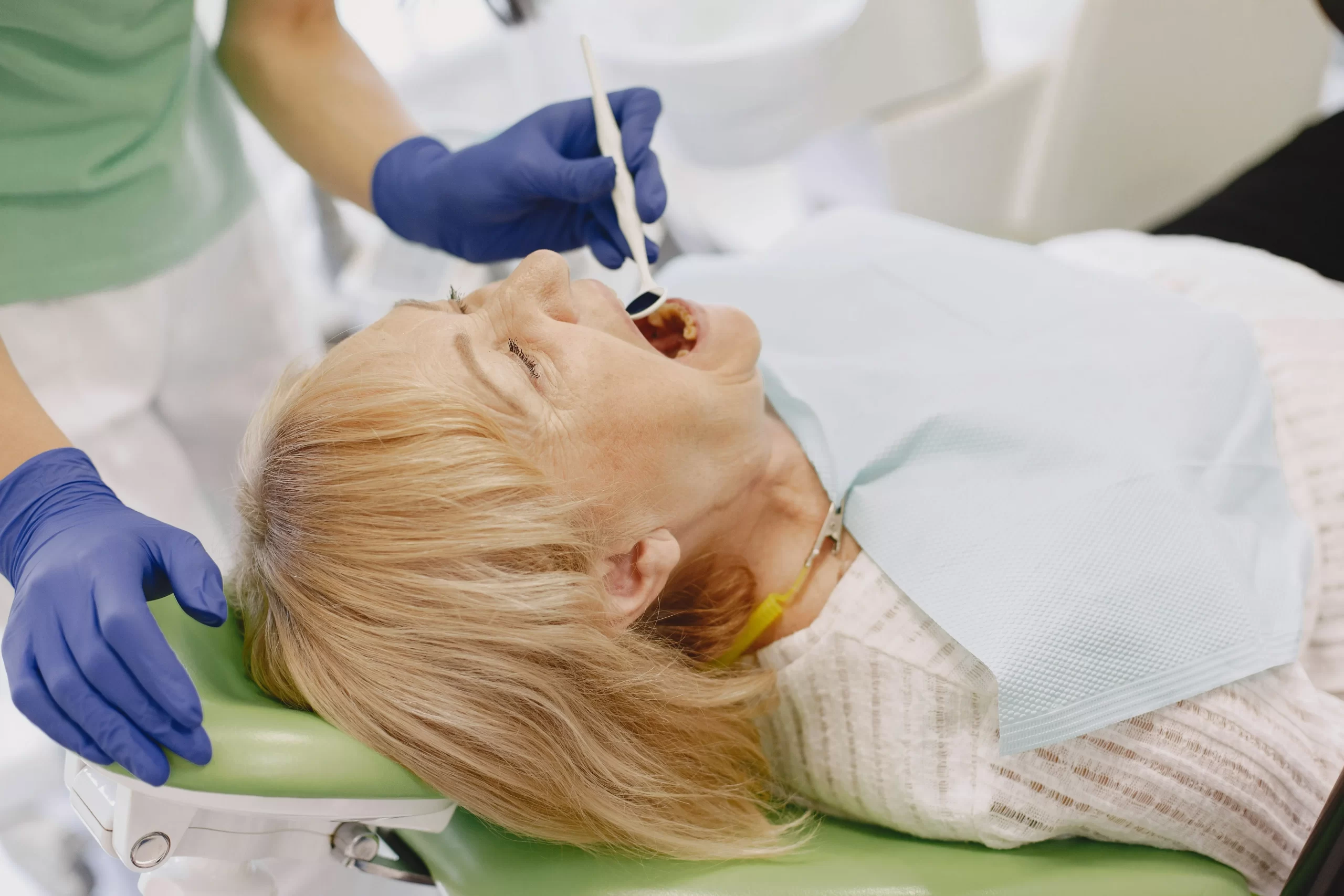
Dental implants cannot develop tooth decay, but the gum and bone surrounding them can still become inflamed. This is known as peri-implant disease.
The condition may begin as inflammation limited to the gum and can progress to loss of the bone supporting the implant. It does not always cause pain in its early stages, so bleeding, swelling or changes around an implant should not be ignored simply because the implant still feels secure.
In this guide, we explain the difference between peri-implant mucositis and peri-implantitis, the symptoms to look out for and how these conditions may be treated.
What is peri-implant disease?
Peri-implant disease is an inflammatory condition affecting the tissues around a dental implant. It is usually associated with bacterial plaque collecting where the implant restoration meets the gum.
There are two main forms:
| Condition | Tissues affected | Typical signs | Supporting bone |
| Peri-implant mucositis | Soft gum tissue around the implant | Redness, swelling and bleeding | No progressive supporting bone loss |
| Peri-implantitis | Gum tissue and supporting bone | Inflammation, deeper pockets, bleeding or pus | Progressive implant bone loss |
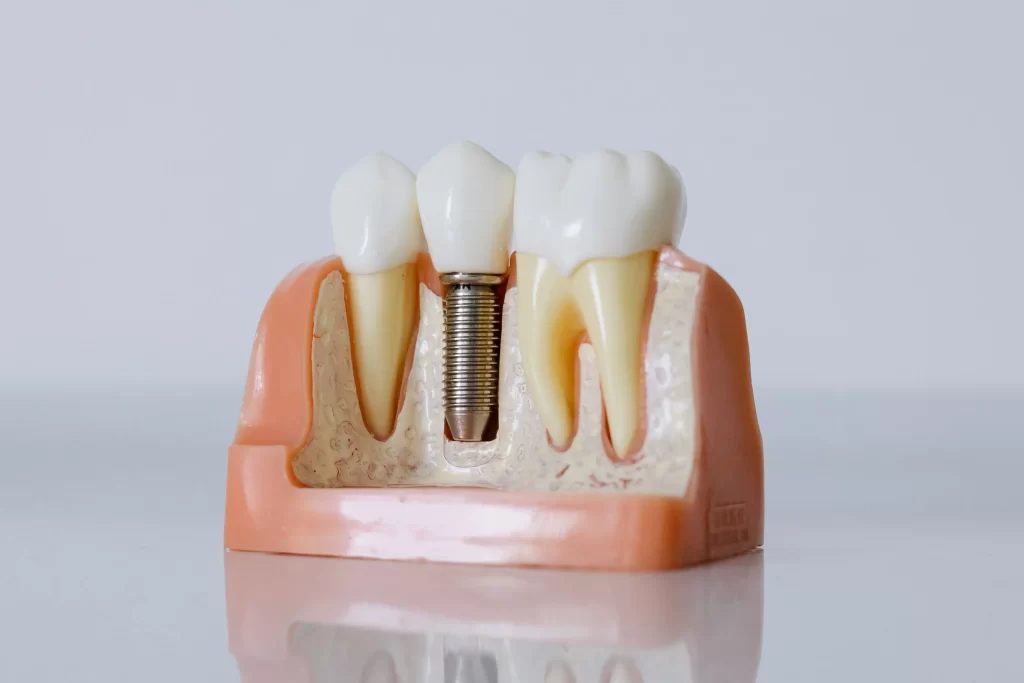
Peri-implant mucositis is confined to the soft tissue. Peri-implantitis involves inflammation together with progressive loss of the bone supporting the implant.
The presence or absence of progressive bone loss changes both the diagnosis and the treatment approach.
For a broader explanation of how implants and their components work, our dental implant FAQs provide a useful introduction.
What is peri-implantitis?
Peri-implantitis is a plaque-associated inflammatory disease affecting the tissues around a dental implant. It is characterised by gum inflammation and progressive bone loss beyond the changes expected after the implant was originally placed.
The government’s evidence-based periodontal guidance explains that diagnosis may involve bleeding or pus during gentle probing, increased probing depths and changes in bone levels around the implant.
Bleeding by itself does not confirm peri-implantitis. The gum condition, probing measurements, restoration design and radiographic findings need to be considered together.
What are the symptoms of peri-implantitis?
Peri-implantitis symptoms can be subtle. Some people experience tenderness or discomfort, while others notice very little until the disease is more advanced.
Signs that should be assessed include:
- repeated bleeding around the implant
- red, swollen or tender gum
- pus or fluid at the gum margin
- a persistent unpleasant taste
- ongoing bad breath
- gum recession
- visible implant threads
- discomfort when biting
- changes in how the implant restoration feels
- movement of the crown, bridge or implant
A loose crown or bridge does not necessarily mean the implant itself is failing. A screw or another component may have become loose.
Any movement should still be examined so that the dentist can determine whether the problem affects the restoration, the surrounding tissues or the implant fixture itself.
What causes peri-implant disease?
Dental plaque is the main trigger for peri-implant inflammation. The likelihood of problems may increase when the position or shape of the restoration makes the gumline difficult to clean.
Factors that may contribute include:
- inconsistent brushing or interdental cleaning
- active gum disease
- a history of periodontitis
- smoking
- diabetes, particularly when blood glucose is not well controlled
- irregular professional implant maintenance
- excess dental cement beneath the gum
- a restoration that restricts cleaning access
Current guidance on peri-implant disease risk factors highlights the importance of gum health, previous periodontal disease and effective plaque control.
Having one or more risk factors does not mean peri-implantitis is inevitable. It may mean that closer monitoring, improved cleaning access or more frequent professional maintenance is appropriate.
How is peri-implant disease diagnosed?
Peri-implant disease cannot be reliably diagnosed from symptoms or photographs alone. A dental examination is needed to determine whether inflammation is limited to the gum or has also affected the supporting bone.
What an assessment may involve
- Reviewing your dental and medical history
The dentist may ask about previous gum disease, implant treatment, smoking, cleaning habits and relevant medical conditions. - Examining the gum
The tissues are checked for plaque, swelling, redness, recession, bleeding and pus. - Taking probing measurements
Gentle probing helps identify inflammation and changes in pocket depth around the implant. - Checking the restoration
The dentist may examine its stability, contour, fit and whether it allows effective cleaning. - Reviewing radiographs
Current images may be compared with earlier records to identify changes in supporting bone. - Assessing movement
Movement may come from a loose restoration or, more seriously, from the implant fixture.
Comparing findings over time is often important. A single probing measurement or radiograph does not always provide enough information on its own.
How is peri-implant disease treated?
Treatment depends on whether the condition is peri-implant mucositis or peri-implantitis, the extent of inflammation and bone loss, and whether local factors are making the implant difficult to maintain.
Treating peri-implant mucositis
The aim is to reduce plaque and address factors that are keeping the gum inflamed.
Care may involve:
- professional cleaning around the implant
- personalised brushing and interdental-cleaning advice
- removal of deposits or excess cement
- adjustment of the restoration when cleaning access is poor
- management of relevant risk factors
- follow-up assessment
Peri-implant mucositis may improve when plaque and other contributing factors are addressed through professional care and effective daily cleaning.
Treating peri-implantitis
Peri-implantitis usually requires a staged and individualised approach.
Initial treatment may focus on:
- reducing inflammation
- cleaning the implant surface
- improving home-care techniques
- removing excess cement or plaque-retentive deposits
- addressing smoking, gum disease or other modifiable factors
- improving access around the restoration
If deep pockets, bleeding, pus or progressive implant bone loss remain, surgical treatment may be considered. This can provide direct access to the implant surface and affected tissues.
Depending on the pattern of bone loss, treatment may involve cleaning the affected area, reshaping tissues or attempting regeneration in selected cases.
The European Federation of Periodontology’s clinical guideline for treating peri-implant diseases supports a structured approach involving diagnosis, risk-factor control, non-surgical care and further treatment where clinically appropriate.
Antibiotics, antiseptics and laser-based procedures may be considered in selected circumstances. However, they are not routinely recommended as replacements for professional mechanical cleaning, improved plaque control and management of contributing factors.
Can an implant with peri-implantitis be saved?
Treatment may control inflammation and allow some implants to be retained, although the outcome depends on the individual clinical findings.
When considering whether an implant can be retained, the dentist may look at:
- the amount and pattern of bone loss
- whether the implant is mobile
- the condition and position of the restoration
- whether the area can be cleaned effectively
- the response to initial treatment
- the condition of the surrounding gum
- smoking and other relevant risk factors
When bone loss is advanced, the implant is mobile, or the disease continues despite treatment, removal may be the most appropriate option.
Your dentist should explain the likely prognosis, treatment limitations and reasonable alternatives clearly before care begins.
How can peri-implant disease be prevented?
Implant maintenance does not stop when the crown, bridge or denture is fitted. Daily cleaning and regular professional reviews help protect the gum and bone surrounding the implant.
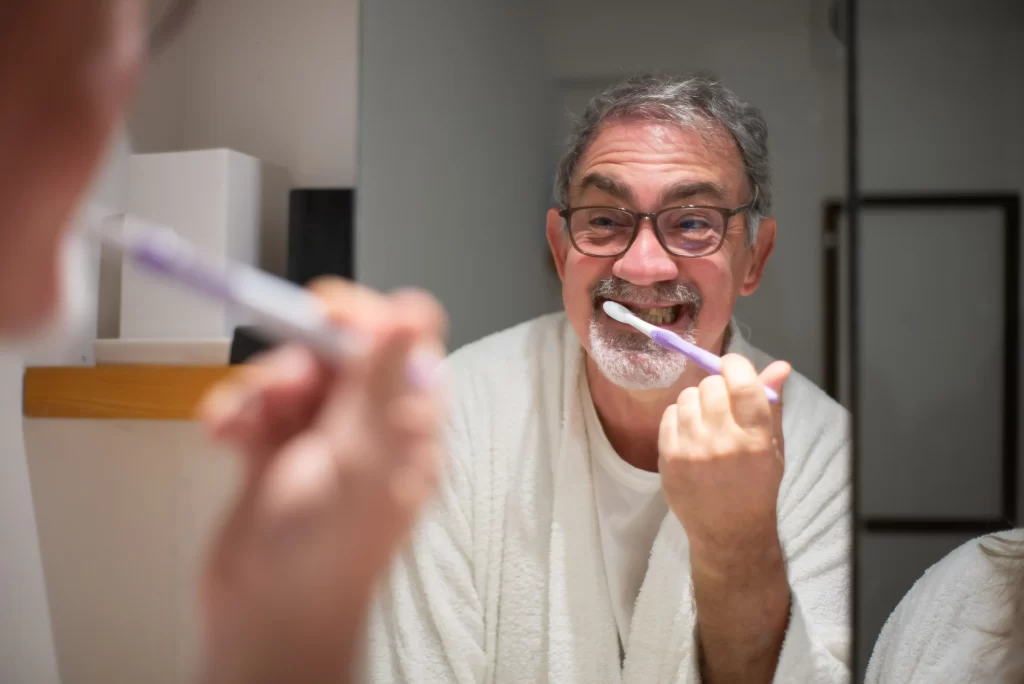
Day-to-day implant care generally involves:
- Brushing twice daily, paying close attention to the gumline.
- Cleaning between implants and neighbouring teeth each day.
- Using interdental brushes, floss or other aids recommended for the restoration.
- Attending professional reviews based on individual risk.
- Reporting repeated bleeding, swelling, recession or movement.
- Keeping gum disease around natural teeth under control.
- Discussing smoking cessation support with a suitable healthcare professional where relevant.
Our guide to taking care of dental implants explains how brushing, interdental cleaning and ongoing reviews contribute to long-term implant maintenance.
When should you arrange an implant review?
Arrange a dental assessment if the gum around an implant repeatedly bleeds, becomes swollen or produces an unpleasant taste.
You should also seek advice if:
- the implant restoration feels different
- your bite has changed
- the gum is receding
- the crown or bridge feels loose
- pain or tenderness is getting worse
Seek prompt dental advice if swelling is increasing, pus is present, or the implant itself appears to move.
If swelling affects your ability to breathe or swallow, seek urgent medical care.
Getting an implant problem properly assessed
Peri-implant disease can range from inflammation limited to the gum to a more complex condition involving progressive implant bone loss.
Treatment planning starts by determining whether inflammation is confined to the soft tissue or has also affected the supporting bone. The condition of the restoration, cleaning access and wider gum health also need to be considered.
If you are concerned about an existing implant, visit our page about help with implant problems and failures to learn more about the available assessment and treatment options.
A clinical assessment can examine the gum, restoration and supporting bone before suitable next steps are discussed.
This article provides general information only and does not replace a dental examination, diagnosis or personalised advice from a suitably qualified dental practitioner. Treatment options, risks and likely outcomes vary according to the condition of the implant, surrounding tissues and your wider health.