
Implant vs Dentures: Why Full-Mouth Implants Offer Better Function
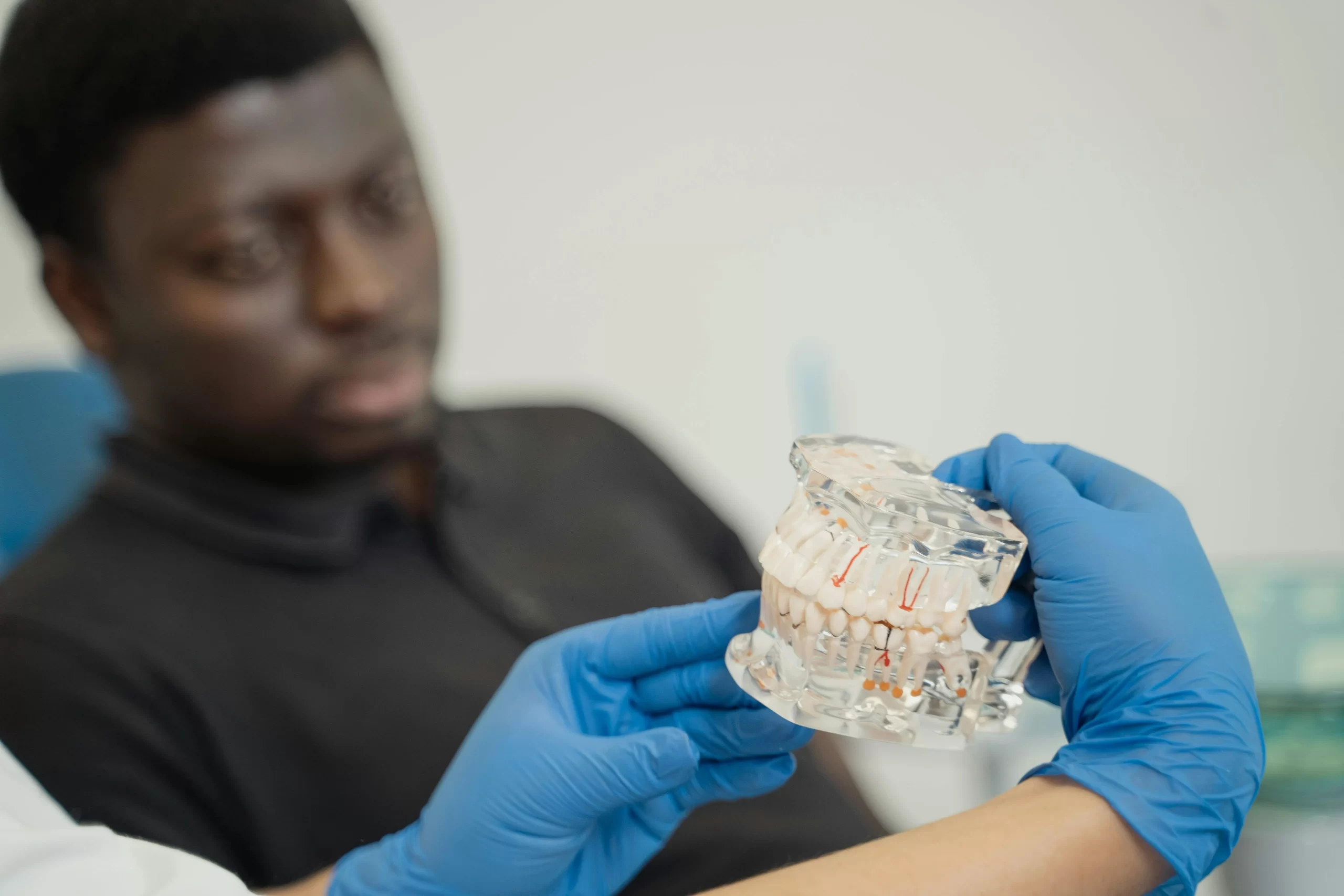
If you have been weighing up implants vs. dentures as a way to replace a full arch of missing teeth, the question most patients really want answered is not which option looks better; it is which one lets them eat, speak, and get through daily life without thinking about their teeth.
This post compares how full-mouth implants and conventional dentures perform in the areas that matter most: chewing ability, bone preservation, speech, comfort, and long-term reliability. None of it replaces a clinical assessment. Whether implants are suitable for you depends on factors only your treating practitioner can evaluate in person.
How Do Full-Mouth Implants and Dentures Actually Work?
Understanding how each option sits in the mouth is the starting point, because that difference in anchoring drives every functional advantage and limitation.
Conventional dentures are removable prosthetics that rest on the gum tissue. They rely on suction, adhesive, and the shape of the underlying ridge for retention. As the jawbone changes shape over time, the fit loosens, which is why dentures typically need periodic relining.
Full-mouth implants take a different approach. Titanium posts are surgically placed into the jawbone, where they fuse with the bone through a process called osseointegration. A fixed prosthesis is then attached to those posts. Because the teeth are anchored to the bone rather than resting on the gum, the result is a prosthesis that does not move, shift, or rely on adhesive.
How Chewing Ability Compares
Chewing efficiency is one of the areas where the implant vs dentures comparison shows the clearest difference.
Conventional dentures restore only a fraction of the natural chewing force. Patients often report difficulty with harder foods like raw vegetables, nuts, and steak. Over time, many wearers shift to softer diets, which can affect nutritional intake.
A peer-reviewed comparative study on PubMed found that implant-supported overdentures produced significantly greater chewing efficiency than conventional dentures, with patients requiring roughly 40 chewing strokes to reach the same particle size that took 69 strokes with conventional dentures. Fixed full-arch implant restorations are expected to perform at least as well, because the prosthesis is permanently attached and does not move during function.
Jawbone Preservation: A Key Difference
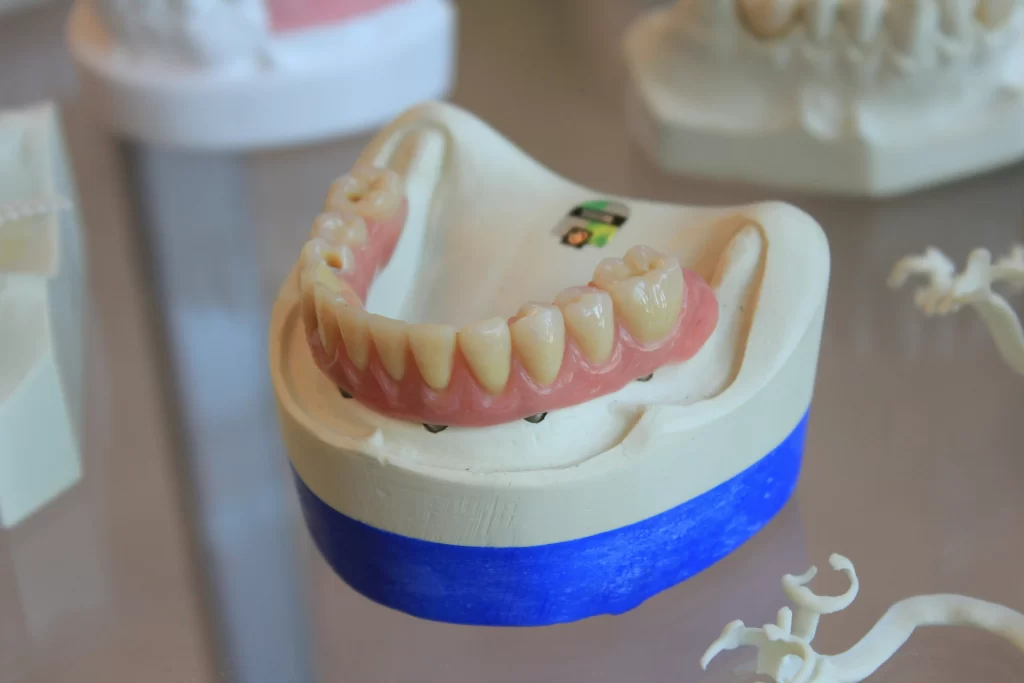
When teeth are lost, the jawbone in that area begins to resorb because it no longer receives the mechanical stimulation it needs from tooth roots during chewing.
Conventional dentures sit on top of the gum and do not transmit force into the bone the way natural roots do. The result is ongoing bone loss beneath the denture, which progressively worsens the fit. This is one of the main reasons denture wearers need refitting every few years.
Dental implants, because they are placed directly into the jawbone, provide mechanical loading that helps maintain bone density around the implant site. While implants do not prevent all bone remodelling, they significantly slow resorption compared to having no roots or implants present. Healthdirect’s explanation of dental implants describes how the implant integrates with the jaw and supports the replacement tooth.
If you are interested in what happens when bone volume is already reduced, and grafting may be needed, our post on understanding dental bone grafts covers the key concepts.
Speech and Day-to-Day Comfort
Denture movement during speech is one of the most commonly reported frustrations among wearers. Even well-fitting dentures can shift slightly when talking, which may produce clicking sounds or affect word clarity. This tends to worsen as the underlying bone resorbs.
Because implant restorations are fixed to the jaw, they do not move during speech. Patients generally report that speaking feels natural without having to consciously manage the position of their teeth.
Comfort follows a similar pattern. Upper dentures cover the palate, which can cause a sensation of bulk, while lower dentures rest on the ridge and may produce pressure sores. Implant-supported restorations do not require palatal coverage and do not press against the soft tissue in the same way.
A Side-by-Side Comparison
| Conventional Dentures | Full-Mouth Implants | |
| Anchoring | Rests on gum tissue, held by suction or adhesive | Titanium posts fused to the jawbone |
| Chewing force | Fraction of natural bite force | Closer to natural bite force |
| Diet restrictions | Harder foods are often avoided | Most foods can be eaten normally |
| Bone preservation | Does not prevent ongoing jawbone resorption | Helps maintain bone density at implant sites |
| Speech | May shift or click during speech | Fixed in place, no movement during speech |
| Maintenance | Daily removal, cleaning, adhesive, and periodic relining | Brushing and flossing similar to natural teeth |
| Comfort | May cause gum irritation or sore spots | No pressure on the gum tissue from a removable base |
| Lifespan | Typically, 5 to 8 years before replacement | Implants can potentially last decades with proper care |
Where Dentures Still Make Sense
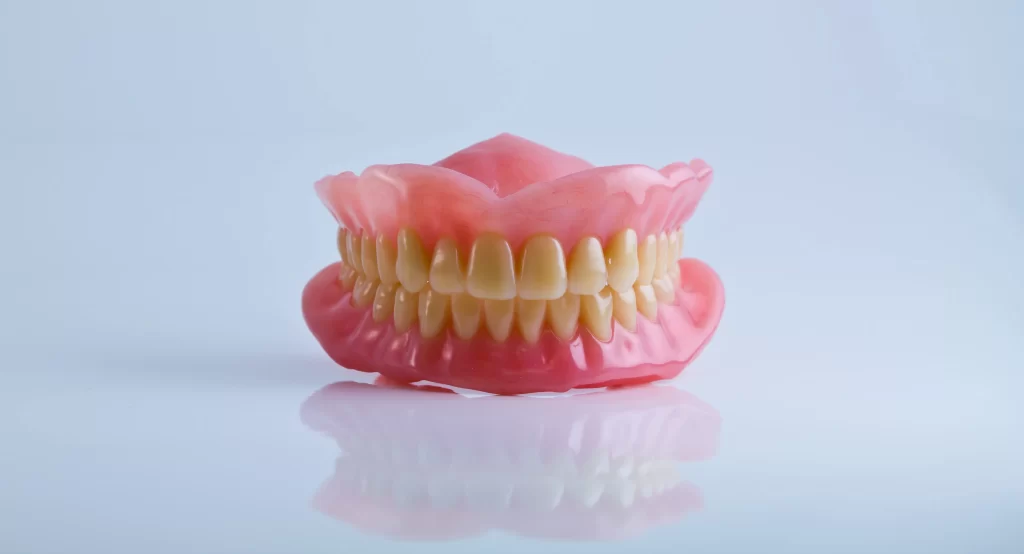
Dentures are non-surgical, faster to deliver, and have a substantially lower upfront cost. For patients who are not candidates for surgery, or who prefer to avoid it, dentures provide a functional replacement that can be fitted without a months-long healing process.
Modern dentures have also improved considerably. Precision-made dentures using digital impressions can achieve a closer fit than older techniques, and implant-retained overdentures, which use as few as two implants to stabilise a removable denture, offer a middle ground between conventional dentures and fixed full-arch implant restorations. Our post on denture options and how to choose walks through the different types and the factors worth considering.
What Full-Mouth Implants Require
Full-mouth implant treatment requires surgery. The posts are placed into the jawbone under local anaesthesia or sedation, and there is a healing period of several months while osseointegration occurs. Some patients may need additional procedures such as bone grafting or sinus lifts if bone volume is insufficient.
The upfront cost is also significantly higher than that of conventional dentures. The total varies depending on the number of implants, whether grafting is needed, the prosthesis type, and case complexity. Cost is worth discussing in detail at the consultation stage so you can make an informed decision.
Who Is a Candidate for Full-Mouth Implants?
Suitability depends on clinical factors that can only be assessed in person. These typically include:
- Sufficient jawbone volume and density, or suitability for bone grafting
- Healthy gum tissue, or gum conditions that can be treated before placement
- Overall health status, including any conditions or medications that may affect bone healing
- A commitment to maintaining oral hygiene around the implants long-term
Smoking, uncontrolled diabetes, and certain medications can influence implant outcomes. These are not automatic disqualifiers, but they need to be assessed as part of the treatment plan.
Before You Decide: What to Raise at Your Consultation
If you are comparing implants vs. dentures for a full-mouth restoration, these are worth raising with your treating clinician:
- Is my jawbone sufficient for implants, or would bone grafting be required?
- How many implants would my case need, and what type of prosthesis would be attached?
- What is the expected healing timeline?
- What is the total estimated cost, including any additional procedures?
Every case has different variables, and the right option depends on your clinical situation, your priorities, and your budget. Our post on dental implants versus bridges covers some of the same decision-making ground from a different angle.
Dr. Bobby Chhoker holds a Master’s degree in Implant Dentistry from the University of Warwick and graduated from the United Medical and Dental Schools of Guy’s and St Thomas’ Hospitals. We provide both full-mouth implant treatments and denture solutions, and the option we recommend depends on what your clinical situation calls for.
Whether you are leaning toward implants, considering dentures, or still working out which questions to ask, a clinical assessment is the clearest way to narrow it down. Book a consultation, and we will walk through your options based on what your jaw, bone, and gums actually need.
All dental procedures carry risks, including surgical procedures such as implant placement. Outcomes vary depending on oral health, bone density, medical history, and commitment to aftercare. Individual consultation is required to determine whether dental implants are suitable for you. This article provides general information only and does not replace advice from a qualified dental practitioner. Before proceeding, you should seek a second opinion from an appropriately qualified health practitioner.