
Invisalign Attachments Explained: Why Some Patients Need Them
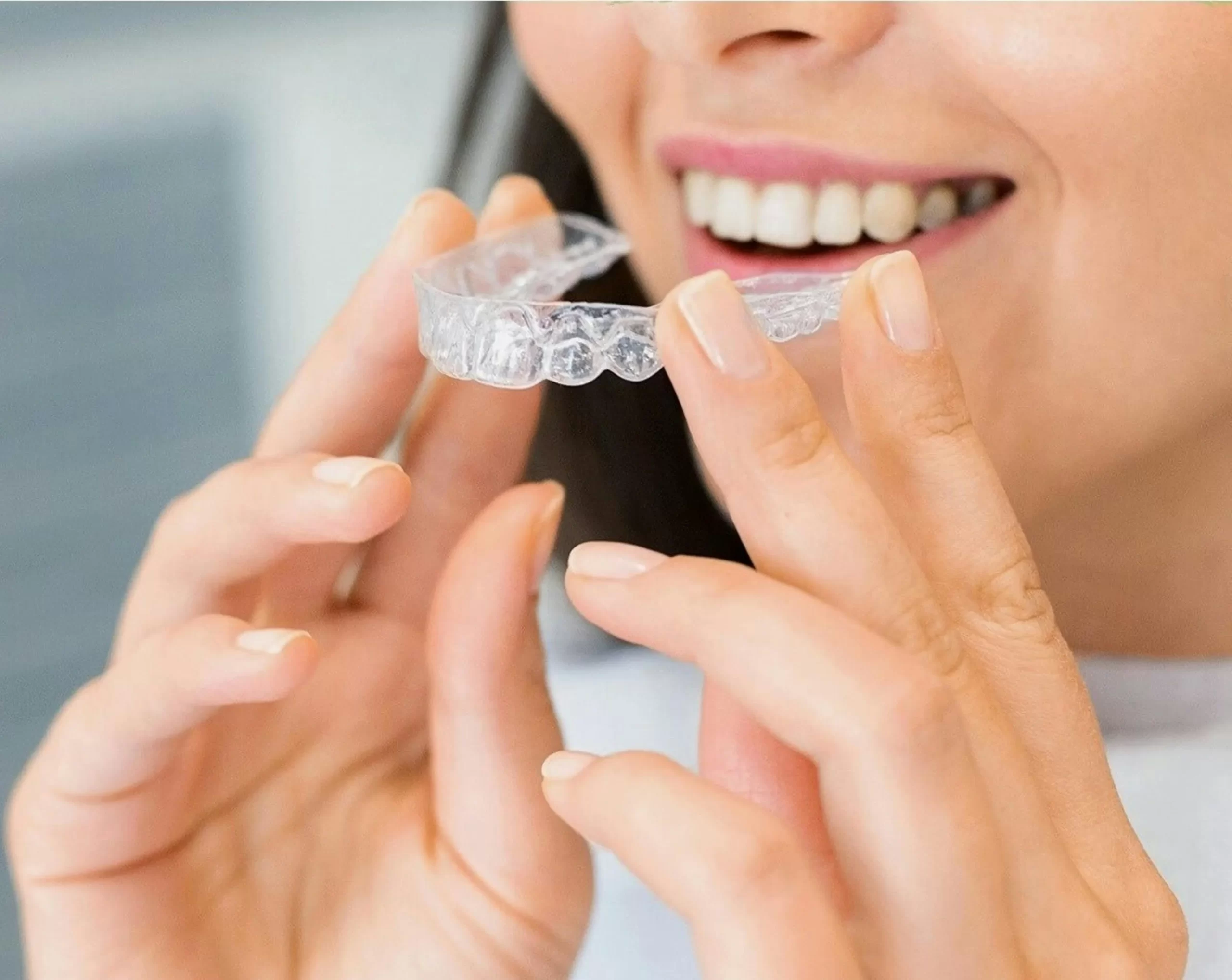
If you have been researching Invisalign and come across the term “attachments,” you may be wondering what they actually are and why not every patient needs them. The short answer is that Invisalign attachments are small tooth-coloured dots bonded to specific teeth to help the aligners grip and move teeth more precisely. The longer answer involves understanding why some tooth movements simply cannot happen with aligner force alone.
This post explains what attachments are, how they work, which cases typically require them, and what you can expect if they are part of your treatment plan. It is general information, not advice on whether attachments are right for your specific case. That call comes from a qualified dental practitioner after a proper clinical assessment.
What Are Invisalign Attachments?
Invisalign attachments are small, tooth-coloured bumps made from dental composite resin, the same material used in tooth-coloured fillings. They are bonded directly to the surface of specific teeth at the start of, or during, treatment.
Their job is to act as anchor points. Aligners fit snugly around them, which allows the aligner to push or pull a tooth in a direction that would otherwise be difficult to achieve with a smooth surface alone.
Attachments are positioned according to where your treatment plan requires extra mechanical control. They are not random. Each one is placed based on the movement needed for that particular tooth.
What Do Attachments Look Like?
Because they are made from tooth-coloured composite resin, attachments tend to blend in reasonably well with natural tooth enamel. Up close, you may notice small raised bumps on the tooth surface, but from a conversational distance, most people will not spot them.
They are less conspicuous than traditional metal brackets, though they are still noticeable up close. Knowing this before treatment starts means your expectations going in are grounded in reality, not the glossy before-and-after photos you tend to see online.
How Do Attachments Help the Aligners?
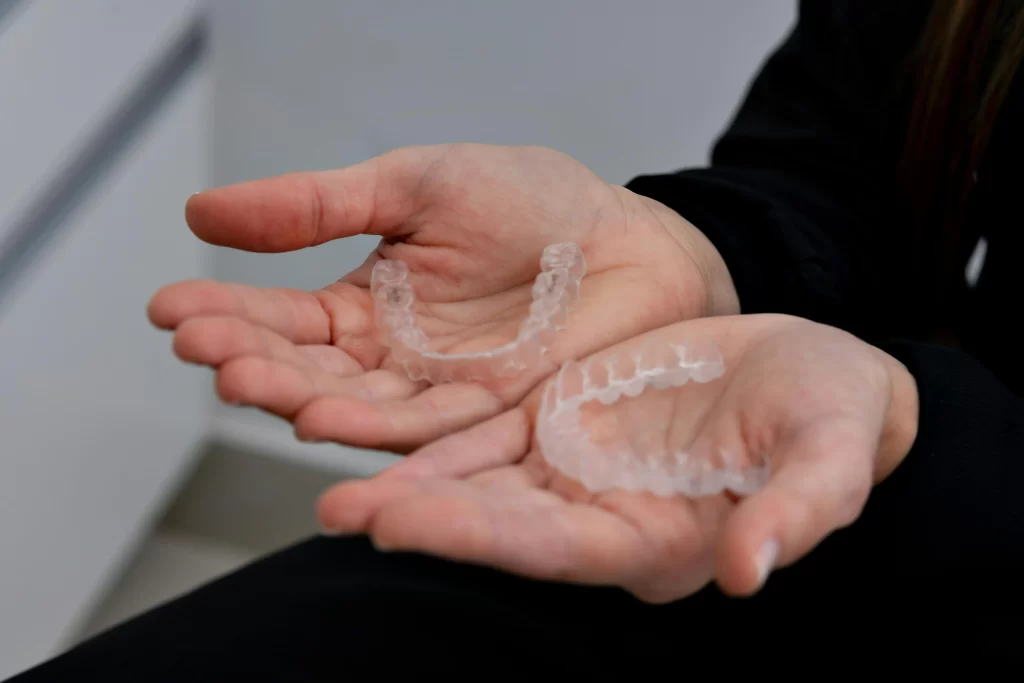
Clear aligners work by applying gentle, consistent pressure across the teeth. The smooth plastic surface of an aligner works well for certain movements, particularly mild tipping and spacing corrections. But teeth do not always cooperate with a smooth surface when more complex shifts are needed. A peer-reviewed study published on PubMed examining the efficacy of Invisalign attachments found that attachments improve the accuracy of rotational and extrusive tooth movements, and that clinicians should consider overcorrecting movements such as anterior extrusion where aligner grip alone is insufficient, reinforcing why attachments are not simply optional extras in more demanding cases.
Attachments change that. When an aligner snaps over a tooth with an attachment, the shape of that bump creates a mechanical engagement point. Depending on the shape and position of the attachment, the aligner can now:
- Rotate a tooth around its long axis
- Extrude a tooth (move it vertically downward or into position)
- Apply controlled torque to the root of a tooth
- Move a back molar in a direction the aligner alone cannot reliably achieve
The geometry matters. Attachments are not a one-size-fits-all addition. Different shapes, such as horizontal rectangles, vertical rectangles, and bevelled ellipses, are selected based on the type of movement required.
Why Do Some Patients Need Attachments and Others Do Not?
Whether you need attachments comes down to the complexity of your case and the specific movements required. Simpler cases involving mild crowding, minor spacing, or slight rotations of flat-surfaced teeth may progress well without them.
More complex scenarios are where attachments become necessary. Cases that commonly require Invisalign attachments include:
- Significant rotations of round-shaped teeth, particularly canines and premolars
- Vertical tooth movements, such as extruding a tooth that has not fully erupted to the right height
- Correcting deeper overbites or underbites
- Moving posterior teeth, including premolars and molars, which have less surface area for the aligner to grip
- Closing larger gaps where teeth need precise control throughout the movement
- Cases involving significant root torque, where the position of the root, not just the crown, needs to change
The need for attachments is determined by the tooth movement required, not by how involved the overall case looks on the surface. A patient with modest crowding might still need attachments on specific teeth, while another patient with a more complex plan may need fewer if the required movements happen to be more straightforward. If you want a broader overview of how clear aligner treatment is planned, our clear braces page covers the range of movements and case types we treat.
Where Are Attachments Placed?
Attachments are placed on whichever teeth need the extra mechanical support. This varies considerably between patients.
Some patients may have two or three attachments on specific problem areas. Others, in more complex cases, may have attachments on eight to ten or more teeth simultaneously. Front teeth, back teeth, top arch, lower arch, or both, the placement is driven entirely by the clinical plan, not by a standard pattern.
Your treating dentist will map out attachment positions during the treatment planning phase using the Invisalign ClinCheck software, which generates a digital preview of your entire treatment sequence before any aligners are made. This is how the type, shape, and location of each attachment are determined.
Ready to Find Out if Invisalign Is Right for You?
Knowing whether your case requires attachments, and how many, comes down to a proper clinical assessment of your teeth, bite, and jaw. At our clinic, that assessment looks at your tooth positions, the movements needed to correct them, and whether attachments would be part of your plan, so you have a clearer picture of what treatment would involve before deciding on next steps. The cost of Invisalign treatment also varies depending on case complexity and the length of treatment required, which is something we discuss openly at the consultation stage.
What to Expect When Attachments Are Placed and Removed
Getting Attachments Placed
Placement is generally straightforward and does not typically involve injections or drilling. The tooth surface is lightly prepared with a mild etching solution, the composite material is applied, and a template aligner is used to position each attachment precisely. The whole process typically takes between 20 and 40 minutes, depending on how many teeth are involved.
You may notice some initial sensitivity to the attachments as your tongue and cheeks adjust over the first few days, but this settles for most patients fairly quickly.
Wearing Aligners Over Attachments
Aligners that accommodate attachments will feel slightly firmer to snap on and off compared to those without. This is intentional. The tension created when the aligner engages the attachment is part of how the force is delivered to the tooth.
Keeping attachments clean requires a little extra attention. Food and staining beverages such as coffee, tea, and red wine can discolour the composite resin over time. Rinsing your teeth before reinserting aligners and brushing attachments gently as part of your normal routine helps keep them looking their best. As Healthdirect’s overview of orthodontic treatment notes, maintaining good dental hygiene is especially important while wearing any orthodontic appliance, since the hardware can make it easier for plaque to accumulate if cleaning habits slip.
Having Attachments Removed
At the end of treatment, attachments are removed by gently polishing them away with a fine dental bur. The procedure is designed to minimise any impact on the underlying enamel, and most patients find it comfortable, though sensitivity varies between individuals.
A Comparison: Treatment With and Without Attachments
| Without Attachments | With Attachments | |
| Complexity | Mild to moderate cases | Moderate to complex cases |
| Tooth movements | Tipping, spacing, mild rotation | Rotation, extrusion, torque, posterior movement |
| Aligner fit | Snaps on smoothly | Slightly firmer engagement over the bump |
| Visibility | Only aligners visible | Small tooth-coloured dots on selected teeth |
| Cleaning | Standard Invisalign care | Extra attention around attachment sites |
| Removal | No additional step | Polished off at treatment completion |
Do Attachments Mean Your Case Is More Difficult?
Not necessarily. It means your case requires precise control over specific movements, and attachments are the clinical tool that helps make those movements more predictable.
From a treatment planning perspective, attachments are a sign that the plan has been thought through carefully, not that something is wrong. They support tooth movements that the smooth aligner surface alone may struggle to deliver reliably. In cases that benefit from attachments, leaving them out may lead to outcomes that fall short of the plan, or a longer overall timeline as refinement aligners compensate later.
The recommendation to include attachments comes from a clinical assessment of exactly what your teeth need to do to reach the final position, nothing more.
Questions Worth Asking Before You Begin
If your Invisalign plan includes attachments, these are worth raising at your consultation:
- How many attachments will I have, and on which teeth?
- What specific movements are the attachments helping with?
- Will my attachments be noticeable in my day-to-day life?
- How long will the attachments be in place?
- Are there any particular care instructions for keeping the composite resin stain-free?
Understanding the reasoning behind every element of your treatment plan helps you commit to it with confidence. Every patient’s plan is mapped out in detail before a single aligner is made, because every bite, jaw, and set of teeth presents its own set of variables.
If you have existing dental work such as crowns, bridges, or veneers, it is also worth understanding how those restorations interact with aligner treatment. Our post on using Invisalign alongside crowns, bridges, or veneers addresses some of the practical questions that come up when planning treatment around existing restorations.
For a broader starting point before your consultation, our post on what to expect from clear braces treatment walks through the process in more detail and is worth reading if you are still weighing up your options.
If you are considering Invisalign and want to understand whether attachments might be part of your plan, the best starting point is a thorough clinical assessment of your teeth and bite. That is where specific answers replace general ones.
Dr. Bobby Chhoker graduated from the United Medical and Dental Schools of Guy’s and St Thomas’ Hospitals and holds a Master’s degree in Implant Dentistry from the University of Warwick. He is a member of the International Academy of Dental and Facial Aesthetics, and the clinic is an Invisalign-trained provider. Our orthodontics service draws on that background, with each treatment plan informed by the patient’s individual clinical needs.
If you are ready to take that first step, book an Invisalign consultation with us and we will map out exactly what your smile journey looks like, attachments and all.
All dental procedures carry risks. Outcomes vary depending on oral health, tooth structure, bite, and commitment to wearing aligners as directed. Individual consultation is required to determine whether Invisalign is suitable for you. This article provides general information only and does not replace advice from a qualified dental practitioner. Before proceeding, you should seek a second opinion from an appropriately qualified health practitioner.