
How to Choose the Right Veneer Shades
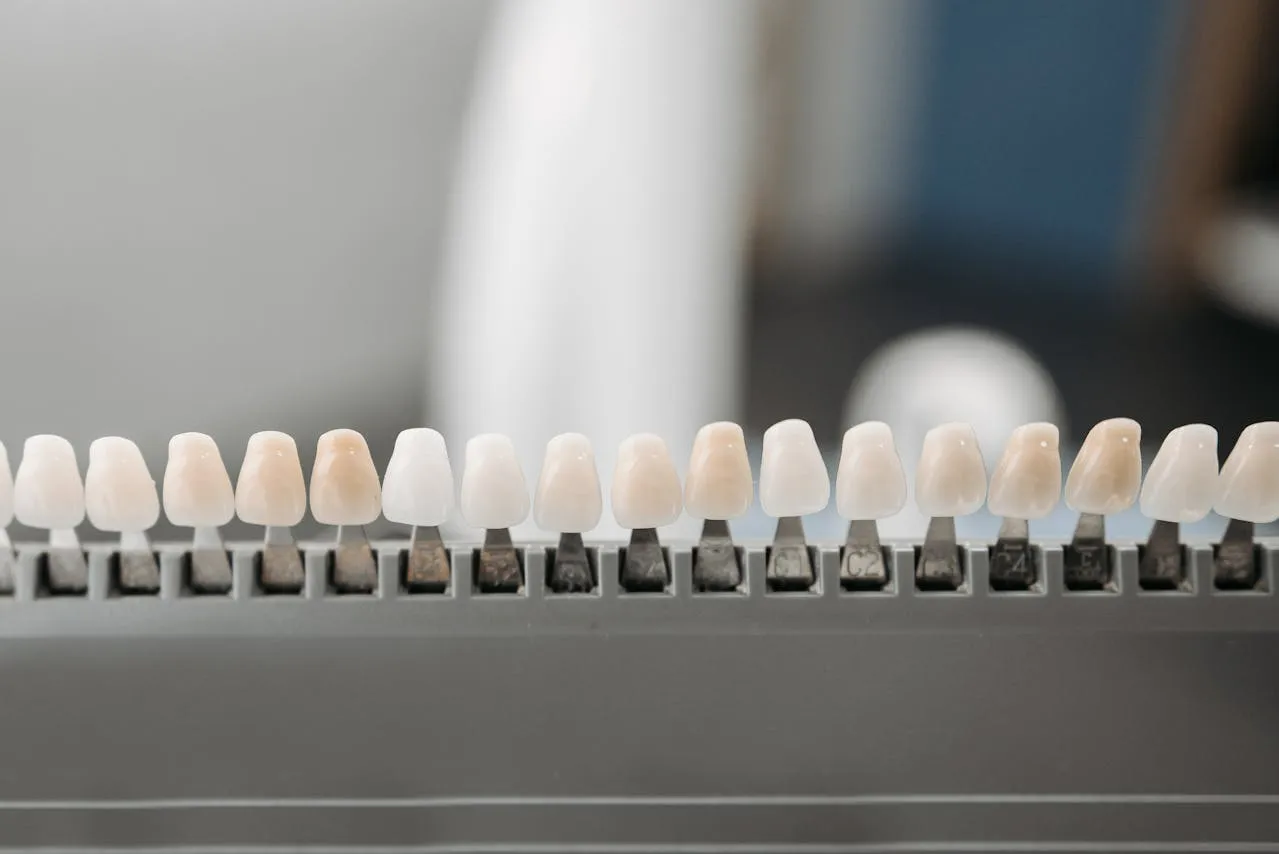
Choosing veneers is not only about shape and size. Colour matters just as much. Veneers that are too white can look obvious, while veneers that are too dark may not give you the result you want. The aim is to choose veneer shades that suit your features, look natural in different lighting and work with your existing teeth.
Many patients ask for the whitest option. In practice, the best veneer shades are not always the brightest. They are the shades that suit your complexion, age, surrounding teeth and the overall look you want to achieve.
Why veneer shade matters
Veneers sit at the front of the smile, so they catch the light whenever you speak or smile. According to Healthdirect’s overview of veneers, veneers are thin coverings placed over the front of teeth to improve appearance. Even a small difference in shade can affect whether the result looks natural.
The right shade can:
- brighten the smile without looking artificial
- blend with nearby teeth
- complement your features
- still look natural in daylight, indoor lighting and photographs
The wrong shade can make veneers stand out for the wrong reasons. Often, that is where disappointment starts.
What veneer shades actually mean
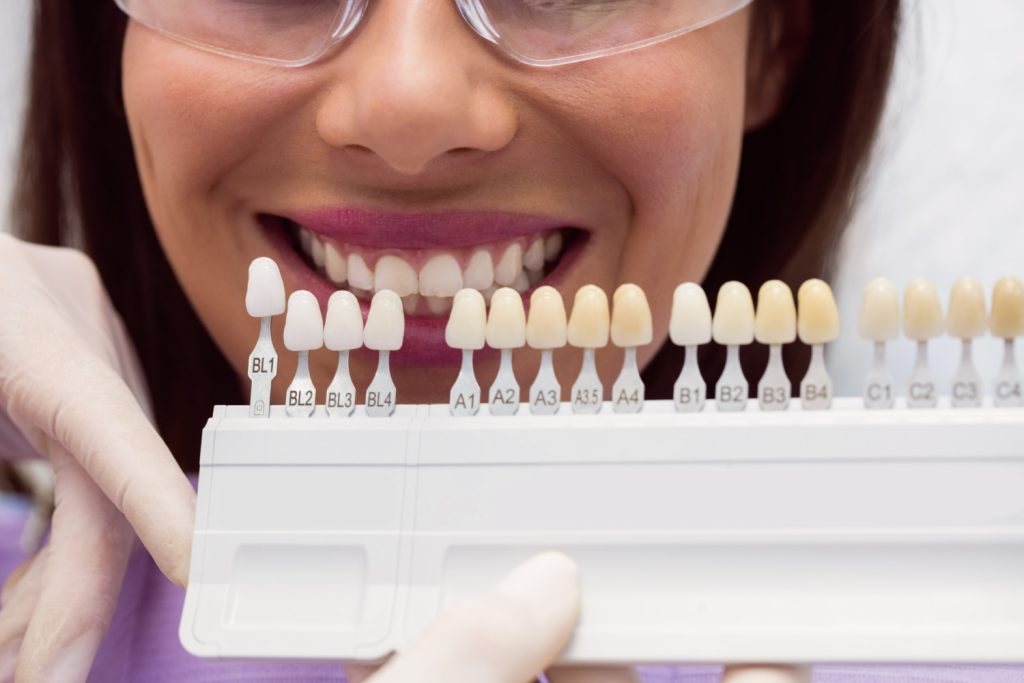
Most dentists use a shade guide to compare veneer colours. The most common is the VITA shade guide, which groups shades into broad families.
| Shade family | General appearance |
| A | Warm, reddish-brown tones |
| B | Warm, yellow tones |
| C | Cooler, grey tones |
| D | Grey-red tones |
Each family includes lighter and darker versions. For example, A1 is lighter than A3.
Brighter cosmetic cases may also use bleach shades such as BL1, BL2, BL3 and BL4. These are often whiter than natural teeth.
Popular veneer shades
Commonly chosen veneer shades include:
- A1 for a natural, healthy-looking smile
- B1 for a slightly brighter look
- BL1 or BL2 for a noticeably whiter cosmetic result
Very bright shades can suit some people, but not everyone. A smile that looks excellent on one person may look too stark on another.
What affects the right veneer shade
Choosing the right veneer shade is more nuanced than picking the whitest tab.
Your natural teeth still matter
If you are only having two or four veneers, the surrounding teeth will still be visible. If the veneers are much whiter than the teeth beside them, the contrast can become obvious.
In partial veneer cases, shade matching usually needs to be more precise because the veneers sit directly next to natural teeth.
If you are comparing materials, our guide to composite vs porcelain veneers explains how they can affect the final appearance.
Skin tone and facial features matter too
The same veneer shade can look different depending on complexion and facial features.
As a broad starting point, some patients find that certain veneer shades look more balanced against their complexion than others. Warmer complexions may suit slightly warmer shades, while cooler complexions may suit cooler or brighter shades. This is why we look at the whole face, not just the shade guide.
Age can influence what looks natural
Natural teeth often become slightly darker and less translucent over time. That does not mean veneers should look aged, but it does mean that very bright shades can sometimes look out of place if they do not suit the patient.
The aim is not to make veneers look older or younger. The aim is to make them look like they belong.
Should you whiten your teeth first?
If you are only having veneers on some teeth, whitening the remaining teeth beforehand is often worth considering. Veneers cannot be whitened after they are made, so the shade selected at the beginning is usually the one you keep.
Whitening first can give more flexibility, especially when the surrounding natural teeth will still be visible. If that may be part of your plan, our article on aftercare for teeth whitening explains what to expect.
Why social media can be misleading
It is common to bring inspirational photos to a consultation. They can be useful, but they are not always realistic.
Many smile photographs online are:
- edited
- taken in flattering lighting
- filtered or retouched
- showing whitening rather than veneers
Patients are often surprised by how different a shade can look in natural daylight compared with the dental chair. The Australian Dental Association’s warning on cosmetic dental procedures is a helpful reminder that cosmetic treatment should be based on individual suitability, not trends.
Natural-looking vs Hollywood-white veneer shades
Many people want one of two outcomes. They either want veneers that no one notices or they want a brighter cosmetic result.
| Natural-looking veneer shades | Hollywood-white veneer shades |
| Usually A1 or B1 | Usually BL1 or brighter |
| Blend more closely with the surrounding teeth | More noticeable and brighter |
| Often suit partial veneer treatment | Often chosen for full smile makeovers |
| Less likely to look artificial over time | Can appear striking in photos and bright light |
Most patients want something in between. They want a smile that looks cleaner and brighter, but still believable.
If you are unsure what you prefer, our smile gallery can help you compare results more realistically.
How we choose veneer shades in practice
Shade selection is usually a step-by-step process.
Step 1: Discuss the look you want
Some patients want a subtle change. Others want a brighter result. Words such as natural and bright can mean different things to different people, so this part matters.
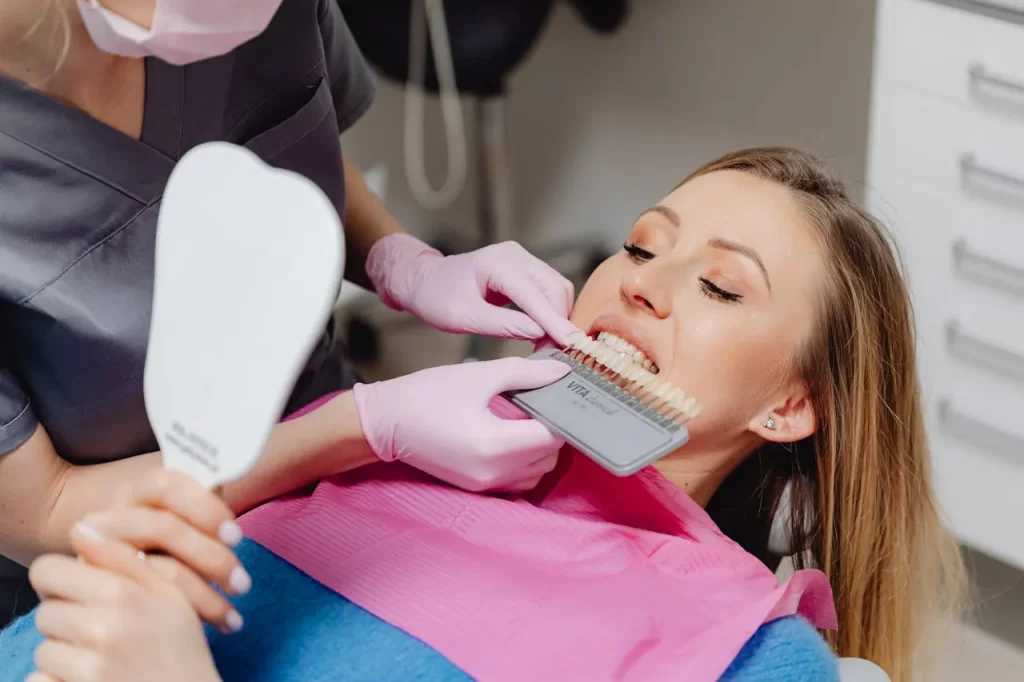
Step 2: Compare shade samples properly
Shade tabs are compared against the natural teeth in different lighting. Daylight is often the most useful because it gives a clearer sense of how the colour will look in real life.
Step 3: Consider the material
Porcelain and composite reflect light differently. Porcelain often has more translucency and depth, which can make the same shade appear softer and more natural.
If you are still deciding whether veneers are the right treatment, our article on how a cosmetic dentistry consultation works explains how these decisions are usually made.
Step 4: Review the result before the treatment goes ahead
Where possible, photographs, digital previews or mock-ups can help you visualise the proposed shade. That is often much easier than choosing from a chart alone.
For a broader patient-friendly overview, the Cleveland Clinic guide to dental veneers explains how veneers are used in cosmetic dentistry.
Common mistakes to avoid
A few mistakes tend to cause problems with veneer shades:
- choosing the brightest shade simply because it is the brightest
- ignoring the colour of the surrounding teeth
- relying only on online photos
- forgetting veneers cannot easily be whitened later
- choosing a shade without seeing it in natural light
The brightest option is not automatically the best one.
When to get more advice
If you are unsure about the recommended shade, it is reasonable to ask to see alternatives or to take more time before treatment goes ahead.
Because veneers are a long-term treatment decision, the shade should feel right from the start. If you want to understand the process in more detail, our porcelain veneers service explains what to expect and when veneers may be appropriate.
The key takeaway is balance
The best veneer shades are not necessarily the whitest. They are the shades that suit your smile, your features and the result you want to achieve.
A successful veneer shade should feel bright without looking artificial, blend naturally with the surrounding teeth and still look good in everyday life, not only in photographs.
This article is general information only and does not replace personalised dental advice, diagnosis or treatment. Shade selection may vary depending on your existing teeth, the material used and your clinician’s recommendations.