
How long do veneers last? A practical guide to long-term results

Veneers are one of the most reliable ways to refine the colour, shape and proportion of your teeth. They can close gaps, rebuild worn edges and create a more balanced smile. Once treatment is complete, one of the first questions patients ask is how long veneers last, and what they can do to help them age well.
With the right planning and consistent care, veneers are intended to provide a long-term improvement rather than a short-lived cosmetic change. Porcelain veneers often remain functional and aesthetic for 10 to 15 years or more. Composite veneers generally offer around 4 to 7 years of service. These are typical ranges supported by clinical studies, not guarantees, because longevity depends on your enamel, bite, habits and maintenance.
This guide explains what affects veneer lifespan and sets out practical, specialist-informed steps to help you protect your investment in your smile.
What affects how long veneers last
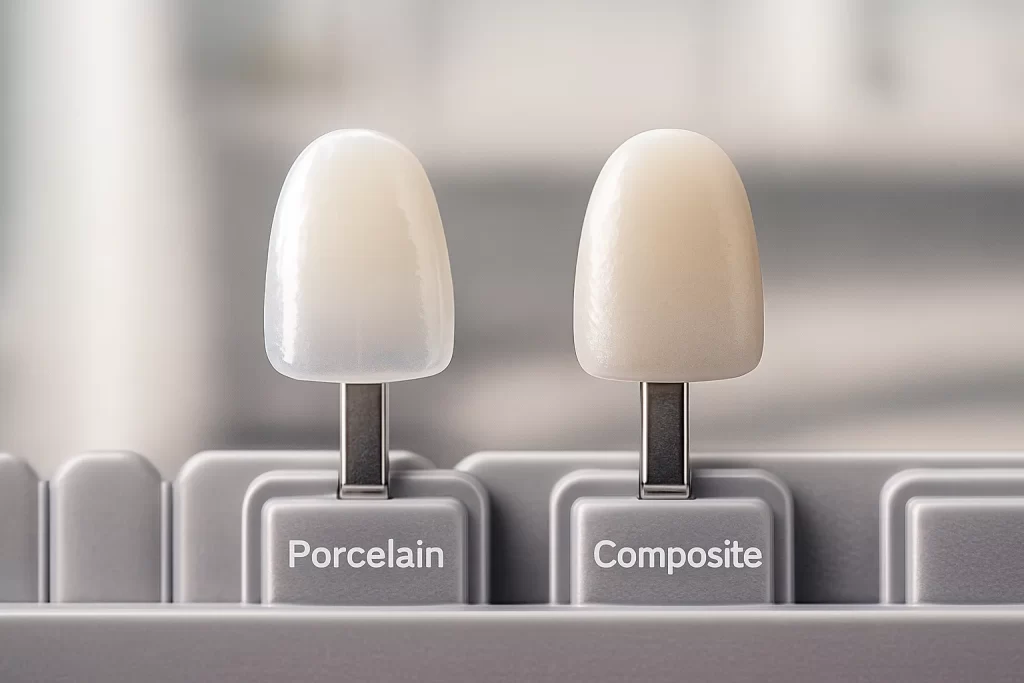
Longevity is not determined by the material alone. In specialist practice, several factors are considered during planning and review.
Key influences include:
- The veneer material, porcelain or composite
- How much natural enamel is preserved
- The quality of bonding and bite design
- Grinding, clenching or nail biting habits
- Diet, oral hygiene and smoking
- Regular professional review and maintenance
A peer-reviewed review on veneer preparation and material choice found that conserving enamel and selecting the appropriate ceramic or composite plays a major role in long-term success. This is why planning and case selection are just as important as the veneer material itself.
If you are still weighing up which veneer type is suitable for your goals, our detailed guide on composite and porcelain veneers offers a useful comparison.
How long do porcelain veneers usually last
Porcelain veneers are thin ceramic shells bonded to the front surfaces of teeth. When bonded to healthy enamel and supported by a stable bite, they offer excellent longevity and natural-looking aesthetics.
A systematic review on the long-term survival of porcelain laminate veneers reported survival rates above 90 per cent at ten years. Many continue to perform well beyond this, particularly in patients who maintain good oral hygiene and attend regular check-ups. These findings mirror what clinicians see in well-planned cases where enamel is preserved, bite forces are balanced and protective appliances are provided when needed.
In practice, many patients can aim for:
- A typical benchmark of around 10 years
- Potential longevity of 15 years or more in ideal conditions
- Stable colour due to porcelain’s resistance to staining
Porcelain’s durability also comes from its ability to mimic enamel, refract light naturally and hold polish over time.
If you would like more insight into how porcelain veneer cases are planned around facial proportions and bite dynamics, our overview of porcelain veneers explains the design and preparation process in detail.
How long do composite veneers usually last
Composite veneers are created from tooth coloured resin shaped directly onto enamel. They are more affordable and often require minimal tooth reduction, so they suit selected cases and staged cosmetic plans.
Composite is softer and more porous than ceramic, which means staining, small chips and gradual wear are expected over time. Clinical reviews and long-term follow-up consistently show lower durability compared with porcelain, especially in people with stronger bite forces or grinding habits.
Composite veneers often offer:
- Around 4 to 7 years of service
- Occasional polishing to maintain a glossy finish
- Small repairs or replacement of individual veneers as needed
Composite can still produce beautiful results, but it is important to be comfortable with periodic maintenance.
Why do some veneers fail earlier than expected
Even well-planned veneers can fail earlier when certain risk factors are present. Understanding these helps reduce complications.
Bite and grinding habits
Grinding, clenching, or heavy bite forces place concentrated stress on veneers. Over time, this can lead to small cracks, edge chipping or debonding. If your dentist identifies wear facets or muscle tenderness, a custom night guard is often recommended to protect both veneers and natural teeth.
Decay or gum disease around the veneer
Veneers rely on natural tooth structure. Poor brushing, inconsistent flossing, high sugar intake or inflamed gums can affect veneer margins. Healthy gums are essential for long-term stability, so daily home care makes a significant difference.
Trauma or misuse
Using teeth to open packets, biting on hard foods like ice or nuts, or sustaining sporting injuries can damage veneers. A custom sports mouthguard is strongly recommended for contact activities.
A clinical analysis of veneer survival and complication patterns found that early complications, such as minor fractures or debonding, are most common in the first few years. This is why early review appointments after placement are important for catching small bite issues before they cause damage.
Long-term care tips to help veneers last

Daily care for veneers is very similar to caring for natural teeth. Small habits make a substantial difference over the years.
Step 1: Brush and floss consistently
Brush twice a day with fluoride toothpaste and floss carefully around veneer margins. The goal is to prevent plaque buildup and maintain healthy gum tissue. Technique matters more than brushing force.
For guidance on routine dental care schedules, our article on how often you should visit the dentist provides a practical overview.
Step 2: Be mindful of staining foods and drinks
Porcelain resists staining, but surrounding enamel and any composite bonding can still absorb colour. Coffee, tea, red wine and strongly coloured sauces are common contributors. Drinking water between these items can help minimise exposure.
Step 3: Protect veneers from grinding and sports
If you grind or clench, a night guard can significantly reduce stress on veneers. This is common for patients with historic enamel wear or previous fractures. A sports mouthguard is strongly recommended for activities with a risk of facial impact.
Step 4: Avoid using teeth as tools
Opening packets, biting fingernails or chewing pens places unnecessary stress on the veneer edges. Avoiding these habits lowers the risk of chips and fractures.
Step 5: Maintain regular professional reviews
During review visits, your dentist can:
- Polish minor roughness that attracts stain
- Monitor gum health and veneer margins
- Adjust the bite if needed
- Detect small chips or cracks early
These visits help address changes before they affect comfort or appearance.
Final thoughts
So, how long do veneers last? Based on clinical studies and long-term follow-ups, porcelain veneers often remain functional and aesthetic for around 10 to 15 years, sometimes longer in ideal conditions. Composite veneers generally provide around 4 to 7 years, though bite forces, diet and maintenance can extend or shorten this range.
For more details on long-term expectations and replacement, our veneers FAQ answers common questions patients ask over time.
The most reliable way to understand how these time frames apply to your own teeth is through a face-to-face consultation with an experienced clinician. A personalised assessment will consider your enamel thickness, bite, habits and long-term goals so you can make an informed decision.
This article provides general information only and is not a substitute for personalised advice, diagnosis or treatment planning from your own dentist or specialist. All dental treatments carry potential risks and benefits. A comprehensive examination is essential before deciding on veneer treatment or replacement.